
Over the last year I had several life events that required a significant portion of my time. Had I still been working full time as a surgeon, I would not have been able to help as much as I did. I am thankful that my life was flexible enough to invest time where it was needed, when it was needed.
When we already have a full schedule and something urgent comes up that needs our attention, something must be cut. Writing my weekly blog was the something that got cut, which is why you haven’t seen blog posts written from me for nearly a year; I haven’t had time to do everything I wanted to do.
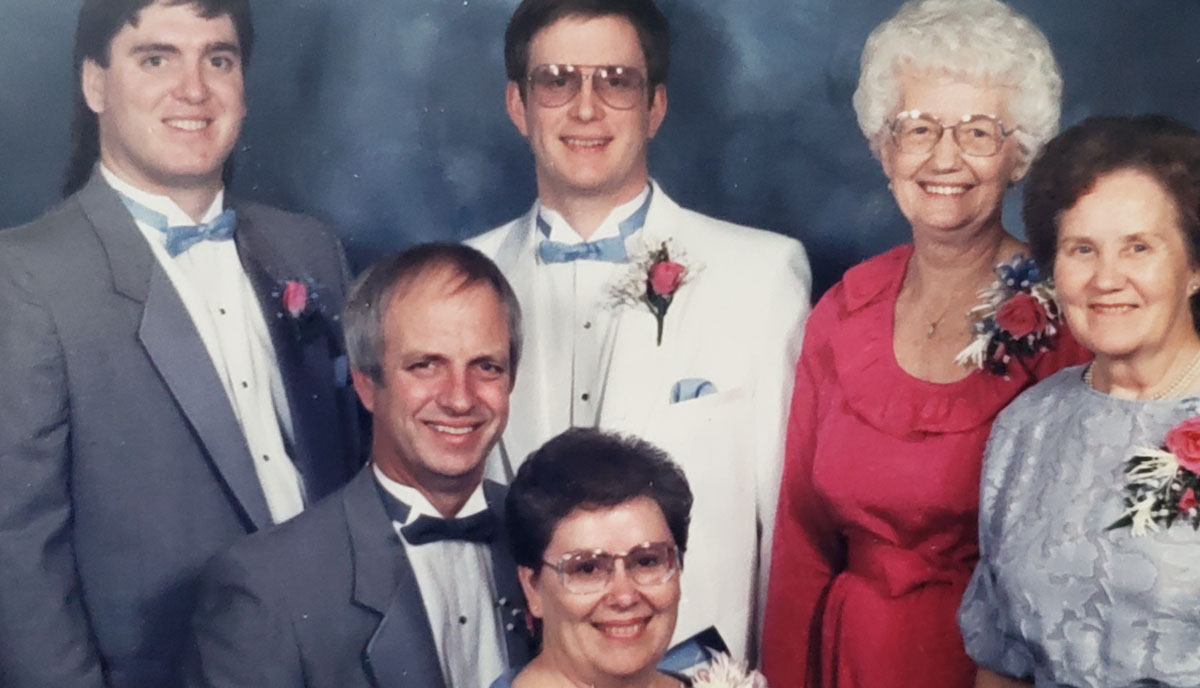
I realized as we prepared our home for Thanksgiving dinner, that I was very thankful for the family I was born into and the lessons they taught me about success. Without that, my time likely would not be as flexible as it is today. Today I would like to share some of those family lessons with you as a thanks to those who shared them with me.
(In the spirit of thank you, since you read this far, I would like to thank you for following my writing. If you wish to have one of my first four books, I would be happy to send you an autographed copy. These books are “Starting Your Practice Right” (About finding the right job and keeping it.) “Eliminating Debt,” “Smart Career Alternatives and Retirement,” and “Investing in Real Estate for Busy Professionals.” Contact me with your name and shipping address and I’ll be happy to send you this gift as a thank you for reading my stories. Continental US only.)
When living with a family, we experience everything they do. Consequently, we pick up what they believe is the right way to do things. These observations direct who we will become. That is why we become like the five people we hang around the most. If I had been born into a family of thieves and drug abusers, I’m certain I would find myself in a completely different position today.
As I now watch my grown children do things I have modeled, I realize I also do the things that my family modeled for me. We always need to be careful what we do and say because our children and grandchildren are watching, learning and imitating us. Following is a list of some of the behaviors I learned that shaped my future, all of which I learned before I had my first full-time job.
(If you wish to hear more of my life lessons in person, join me at The White Coat Investor Conference in Orlando Florida, February 24-27, 2027. I will be speaking on living your best life now. Hope to meet you there as we learn to build wealth and fight burnout. Those who register by December 16th will get a swag bag.)
This is probably the single most important factor to my financial success. Without this, one will never have any money available to save for the future. Both my parents, my wife’s parents and our grandparents modeled this behavior. Consequently, when we started life together, we did so by establishing a lifestyle that relied on 50% of our income. This gave us room to spend money when something interesting came up (whether it be a toy or an investment), give to worthy causes, and it allowed us to put away a lot of savings for the future. We never felt deprived because we didn’t allow ourselves to spend all our income. We lived a nice life and were even able to take 8-12 weeks of vacation every year.
Avoid borrowing money
It always riles people up when I say, “The reason people borrow money is to buy things they cannot afford.” Why do they dislike this statement? Because America has become a society built on debt. Think about it. If you need to borrow money to buy a car, it is because you don’t have enough cash saved to pay for the car. We are actually saying, “I would really like to buy that car, but I’m a little short on cash. Could you please lend me the money?” Some say they are leaving their money invested and using ‘leverage’ to buy the car. Which translates to “I don’t have enough money to buy this car and invest at the same time.” Either way, you can’t afford the car. Our parents and grandparents did not borrow money to buy stuff. Their mortgage was their only debt. They each paid off their mortgages and became debt free. King Solomon once said, “Just as the rich rule over the poor, so the borrower is servant to the lender.” If you don’t think you are servant to the lender, skip a few loan payments and see what happens. I also learned that credit cards are not my friend. They do not come with easy monthly payments; those payments happen only from my poor planning. Every month pay off the balance on your credit card, because carrying a balance comes with a very steep interest rate. Read my book on Eliminating debt for more information.
Invest for the future, beginning with my first paycheck
When I was a teen, my uncle gave me a very short publication called Common Sense: A simple Plan for Financial Independence, by A. L. Williams. That was a fantastic plan for my future. I read it several times over the years. When I got my first full-time job, my first year of residency, I followed the principles it spelled out. If we begin on the right path from our first paycheck, it is much easier to stay on track. But if we start a pattern of spending all our money, that’s a hard pattern to break. Consequently, the money we saved during residency has grown to seven figures today. Unfortunately, my fellow residents would not follow my lead, at the time they often stated they would start saving money when they became attendings and were making “the big bucks.” If a person can’t learn to save on a small income, they won’t be able to save on a larger one either. I learned early that compound interest and mutual funds were great friends. They have been my lifelong allies.
Always have spending money available
We never know what will come across our path. But whenever opportunity arises, it’s best to be ready to act. I learned to keep money in my pocket for the little things that I might wish to purchase. Always have enough money in our checking account to cover a couple of month’s expenses. Maintain an emergency fund of at least six month’s expenses. And keep a separate opportunity fund, to take advantage of something special that might come up but doesn’t qualify as an emergency. There is no way to count how many times I have benefitted from having liquid funds available. As a teen, one of my band members would borrow money from me against the money we were to earn playing an upcoming gig. Since the money the band earned flowed through me, the manager, I was guaranteed to be paid. He often offered to pay me double what he borrowed which was quite a nice return. As a young surgeon, the surgeons in town banded together to build a surgery center and when the initial seed money was called for, I had it. Other physicians, who had been in practice much longer than I, did not have the cash to invest. They did, however, have excuses ready like, “I just got back from Hawaii,” or “My daughter just got married.” If we don’t spend it all, when opportunity knocks, we will be ready to open the door.
Buy quality
My father instilled in me the importance of spending money on things that last. When I was starting a rock band, at the age of 13, I went shopping for an electric guitar and amp. I was planning to buy used equipment with the cash I had. When I found a set I wanted, I asked my dad’s opinion before making such a big purchase ($300 in 1975). He went to the store with me and told me not to buy such a cheap instrument. He said in very short order I would find it to be inadequate, and I would want to buy a better one. Don’t waste money buying junk just because it is cheap. He took me to a local music store, managed by the father of our drummer, and we spent $800 for their best Fender electric guitar in the store and a small quality Fender amplifier. I still play that fine quality guitar today, more than 50 years later. My father loaned me the $500 I needed to get a better instrument and said I could pay him back with earnings from the band. I paid him back and went on to earn a lot of money in that band over the next five years. I passed on this lesson to my young son when he wanted to buy a cheap toy on a vacation. I told him it would not last and it would be a waste of his money, but he bought it anyway. It was broken and in the garbage before the end of the day. From then on, before he made a purchase, he would ask me if I thought the thing he wanted to buy would last a long time and be worth the money. If only everyone could learn that lesson in grade school.
When I told my wife I wanted to include this one, she laughed. “That’s not financial advice,” she said. Well, she was right about that. But it was great life advice. Our feet take a pounding with every step. Bad shoes lead to problems. When football season started, my parents always got me new football shoes. Same with basketball, baseball, and track. Sometimes last year’s shoes still fit but my parents showed me the shoes were worn out. “You will get hurt playing with poor shoes,” they said. When I started working in the mill for the summer, dad convinced me to buy expensive work boots that were made to walk on concrete all day and would protect my feet from twisting an ankle or the trauma of a dropped object. Over the years, who knows how many injuries I didn’t have because I wore good shoes. Those injuries would have cost a lot of money and lost time at work, so I guess it is financial advice after all.
Real estate is a great investment
I grew up watching and helping my grandparents with their real estate investments. They always self-managed their investments and I helped with repairs. They would save money from grandfather’s job at the plywood mill and buy a rental house. That house put money in their pocket every month for the rest of their lives. When my grandfather died, I was about 15 years-old, and my grandmother was too young to collect social security. Yet, she did not need to get a job. Those rental houses paid her expenses, and she never needed a job during the 40+ years of her life after his death. I decided I would invest in real estate and follow her lead. Today, the cashflow from my real estate investments provides enough income that I do not need to work. Grandma provided a great example to follow and her story inspired my real estate book.
There are many more lessons I learned from my family about life and money, but this is only a blog article and not a book. I am thankful for the good examples my family provided which gave me a great head start on life. What life lessons did you learn from your family’s example?